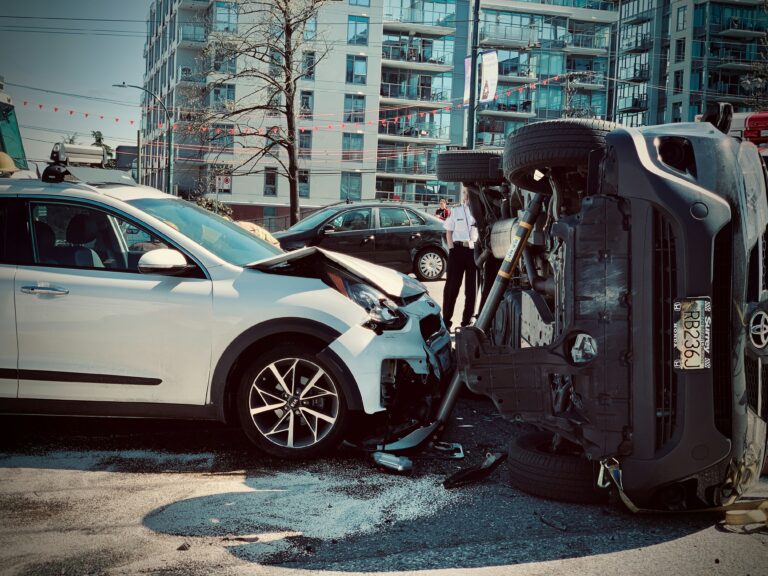
You were only along for the ride. You did nothing to cause the wreck. Yet injured passengers are often the last people to get paid, because two drivers and two insurance companies can spend months arguing about who caused it.
As a passenger in Georgia, you can bring a claim against any driver whose carelessness caused the crash: the other driver, the driver of the car you were riding in, or both. Their bodily injury liability insurance pays first. If that is not enough, uninsured/underinsured motorist (UM) coverage can add more, including UM on the car you were in and on your own household’s policy. Passengers are rarely blamed for a crash, so the fight is usually about coverage and proof of injury, not fault.
Key Takeaways
- A passenger can claim against every at-fault driver, including the driver of the car they were riding in.
- Coverage is usually layered: liability policies first, then UM coverage, with MedPay and health insurance helping in the meantime.
- Uber and Lyft passengers are covered by at least $1 million in liability coverage under Georgia law once a ride is underway.
- When several people are hurt, policy limits can run out fast, so identifying every policy early matters.
- Most Georgia injury claims must be filed within two years of the crash (O.C.G.A. § 9-3-33).
Who Can a Passenger Sue in Georgia?
A passenger’s claim follows fault. You can pursue every driver or company whose negligence helped cause the crash:
- The other driver. If another car ran a light, followed too closely or turned in front of you, that driver’s liability insurance is the first target.
- The driver of the car you were in. Georgia does not bar a passenger from making a claim against their own driver, even a friend or coworker. In most cases the claim is paid by that driver’s insurance, not out of their pocket. Claims against a spouse or parent, and policies with household exclusions, can raise special issues, so have a lawyer review them.
- Both drivers. When both share the blame, Georgia divides fault between them (O.C.G.A. § 51-12-33), and you can recover from each according to their share.
- An employer or company. If a driver was working, such as making deliveries or driving a company vehicle, the employer’s commercial policy may apply.
- A rideshare company’s insurer. If you were in an Uber or Lyft, much higher coverage applies (see below).
Whose Insurance Pays, and in What Order
Passenger claims are usually built in layers. The order matters, because policy limits run out and several injured people may be claiming against the same policy.
| Layer | What It Is | When It Applies |
|---|---|---|
| 1. At-fault driver’s liability coverage | Bodily injury coverage on the policy of the driver who caused the crash. Georgia’s minimum is $25,000 per person and $50,000 per accident. | First, against every driver who caused the crash |
| 2. Host driver’s liability coverage | The policy on the car you were riding in | When your own driver caused or helped cause the crash |
| 3. UM on the car you were in | Uninsured/underinsured motorist coverage on the host vehicle | When an at-fault driver has no insurance or too little |
| 4. Your own UM | UM on your policy, or on a policy of a relative you live with | Can add more when the layers above are not enough |
| 5. MedPay | Optional medical payments coverage | Pays medical bills regardless of fault, up to its limit |
| 6. Health insurance | Your health plan | Keeps treatment moving while the claim is pending; the plan may seek repayment from your settlement |
Georgia UM coverage is “added on” by default, which means it is available on top of the at-fault driver’s liability limits instead of being reduced by them, unless the policyholder chose reduced-by coverage in writing (O.C.G.A. § 33-7-11). Many people have more coverage than they realize, which is why our uninsured motorist lawyers review every policy in the household. Our guide to Georgia UM coverage explains how it works.
Passengers in an Uber or Lyft
Rideshare passengers get the highest coverage on the road. Under O.C.G.A. § 33-1-24, a transportation network company driver must carry:
| Driver’s Status in the App | Minimum Coverage Required in Georgia |
|---|---|
| App off | The driver’s personal auto policy only |
| App on, waiting for a request | $50,000 per person / $100,000 per accident for injuries, $50,000 property damage |
| Engaged in a prepaid ride | $1 million liability, plus UM coverage of at least $100,000 per person / $300,000 per accident |
As a paying passenger during a trip, you fall in the $1 million tier. Report the crash in the app, screenshot your trip receipt and the driver’s profile, and write down the time. Our Uber and Lyft accident lawyers can explain how these tiers apply to your crash.
Can a Passenger Be Blamed for a Crash?
Rarely. A passenger does not control the car. But insurers still look for ways to cut what they pay:
- Riding with an impaired driver. Insurers may argue a passenger who knowingly rode with a drunk driver accepted the risk.
- Distracting the driver. Grabbing the wheel or causing a distraction can be used to assign a share of fault.
- Seat belt use. Georgia’s 2025 tort reform law, SB 68, changed O.C.G.A. § 40-8-76.1 so that evidence of whether an injured person was wearing a seat belt may now be admitted in civil cases, and it may be used to reduce a recovery. How it applies to a particular case can be disputed. Buckle up, and tell your lawyer honestly whether you were belted.
Georgia’s modified comparative fault rule still applies: a person found 50% or more at fault recovers nothing, and anyone less than 50% at fault has their award reduced by their percentage. For a passenger, that rarely comes into play, but it explains why insurers raise these arguments.
When There Isn’t Enough Insurance for Everyone
A crash with several injured people can exhaust a policy fast. If the at-fault driver carries only Georgia’s minimum of $50,000 per accident, every injured passenger and driver is competing for that same $50,000. That is why moving early matters. We identify every policy that could apply, including UM on each vehicle and in each passenger’s household, before limits are paid out to others.
What to Do After a Crash as a Passenger
- Get medical care the same day. Neck, back and head injuries often show up a day or two later. Early records tie your injuries to the crash.
- Collect information for every vehicle, including the car you were riding in: driver names, insurance companies, policy numbers and plates.
- Note where you were sitting and whether you were wearing a seat belt. Take photos of the inside of the car if you can.
- In a rideshare, screenshot the trip, report the crash in the app and save any messages from the company.
- Get the police report number. Georgia requires crashes with injuries to be reported to police (O.C.G.A. § 40-6-273).
- Don’t give recorded statements to either driver’s insurer until you understand which policies apply. Adjusters use early statements to question your injuries.
- Don’t sign a release or cash an early check. Once you sign, your claim is usually over, even if you need more treatment later.
- Track missed work and daily limits. A passenger claim covers the full cost of the injury, not just the medical bills.
Our free After the Wreck guide covers the first 72 hours, insurance calls and the deadlines you cannot miss.
Frequently Asked Questions
Can I Sue the Driver of the Car I Was Riding In?
Yes. If your driver was careless and helped cause the crash, you can make a claim against their liability insurance, even if they are a friend or coworker. In most cases the insurance company pays, not the driver personally. Claims involving a spouse, parent or household policy can raise special issues worth reviewing with a lawyer.
Whose Insurance Pays If Both Drivers Were at Fault?
Both. Georgia divides fault between the drivers, and each driver’s liability coverage pays its share. If those policies are not enough, uninsured/underinsured motorist coverage can add more.
Does My Own Car Insurance Cover Me as a Passenger in Someone Else’s Car?
It can. Your own uninsured/underinsured motorist coverage, and MedPay if you have it, may apply when you are hurt as a passenger. A relative’s policy may also cover you if you live in the same household.
How Long Does a Passenger Have to File a Claim in Georgia?
Most injury claims must be filed within two years of the crash under O.C.G.A. § 9-3-33. Insurance policies can require much faster notice, so it is best to talk to a lawyer early.
If you were hurt as a passenger anywhere in Georgia, our car accident lawyers can map every source of coverage and deal with the adjusters, including a friend’s or family member’s insurer, without putting you in the middle. Call 888-BIG-GUNN (888-244-4866) or request a free case review online for a free, no-obligation consultation. There is no fee unless we recover for you. Hablamos español.